
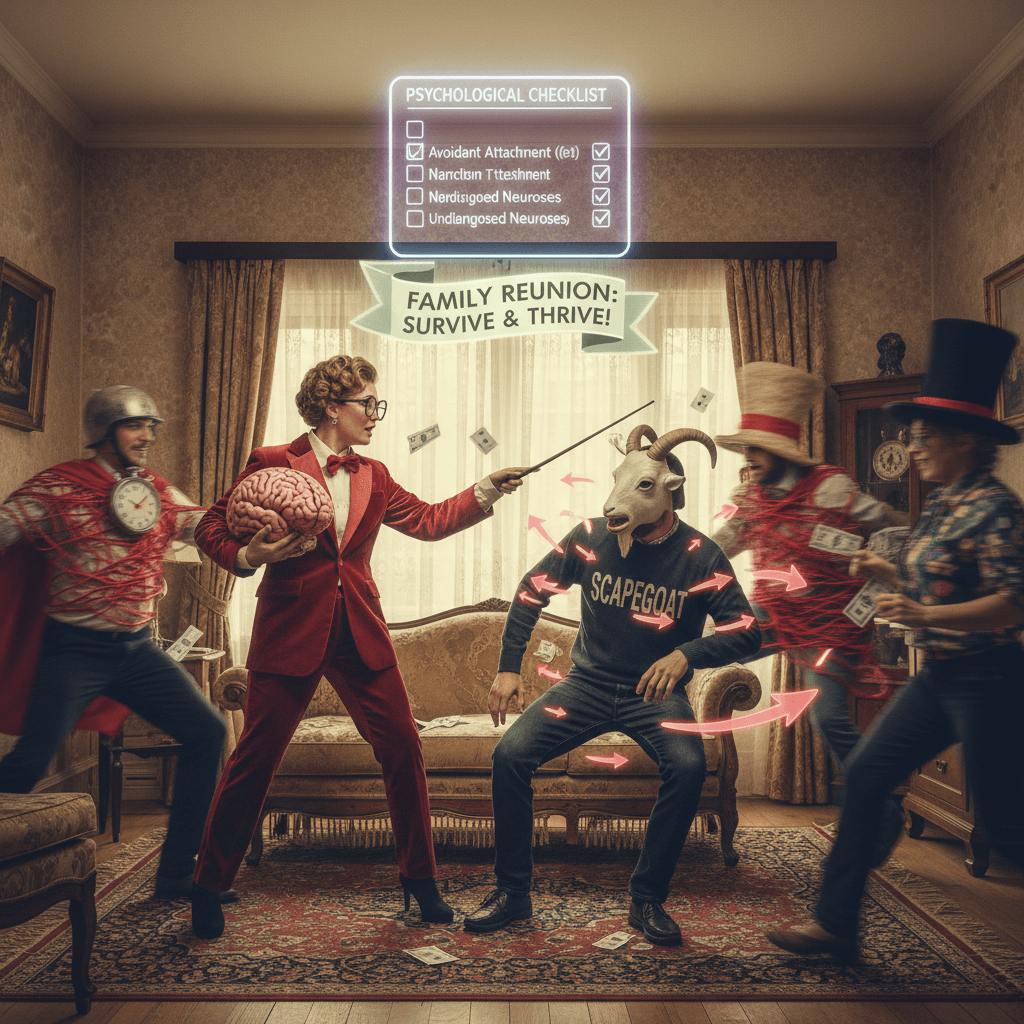
armchair therapistfamily dynamics speedrunscapegoat detectionpsychological checklist
DSM-5 cosplay as family reunion survival guide
1. Who’s allowed to be human, and who isn’t?
In a toxic narcissistic family, most members can make mistakes and still be forgiven or even excused. The scapegoat’s mistakes—real or fabricated—are magnified, dissected, and pointed out to outsiders.
2. Who tells the same story, and who changes their story?
The scapegoat’s account of events tends to be consistent over time. Abusers often shift, embellish, or contradict their earlier versions depending on the audience.
3. Who uses specifics, and who speaks in vague accusations?
A scapegoat can usually describe concrete events with times, places, and details. Abusers tend to rely on broad, emotional claims like “they’re just difficult” or “you don’t know what they’re really like.”
4. Who is under constant surveillance and gossip?
If one person is the ongoing topic of criticism, yet you rarely hear them badmouthing anyone else, that’s a red flag.
5. Who stays calm vs. who needs a crowd?
The scapegoat may appear defensive in the moment (because they’re under attack) but generally seeks peace. The real bully needs witnesses, backup, and an audience to feel powerful.
6. Who gets isolated?
If an outsider notices one person consistently excluded, avoided, or treated as though they’re radioactive, that’s often the true target of the bullying.