
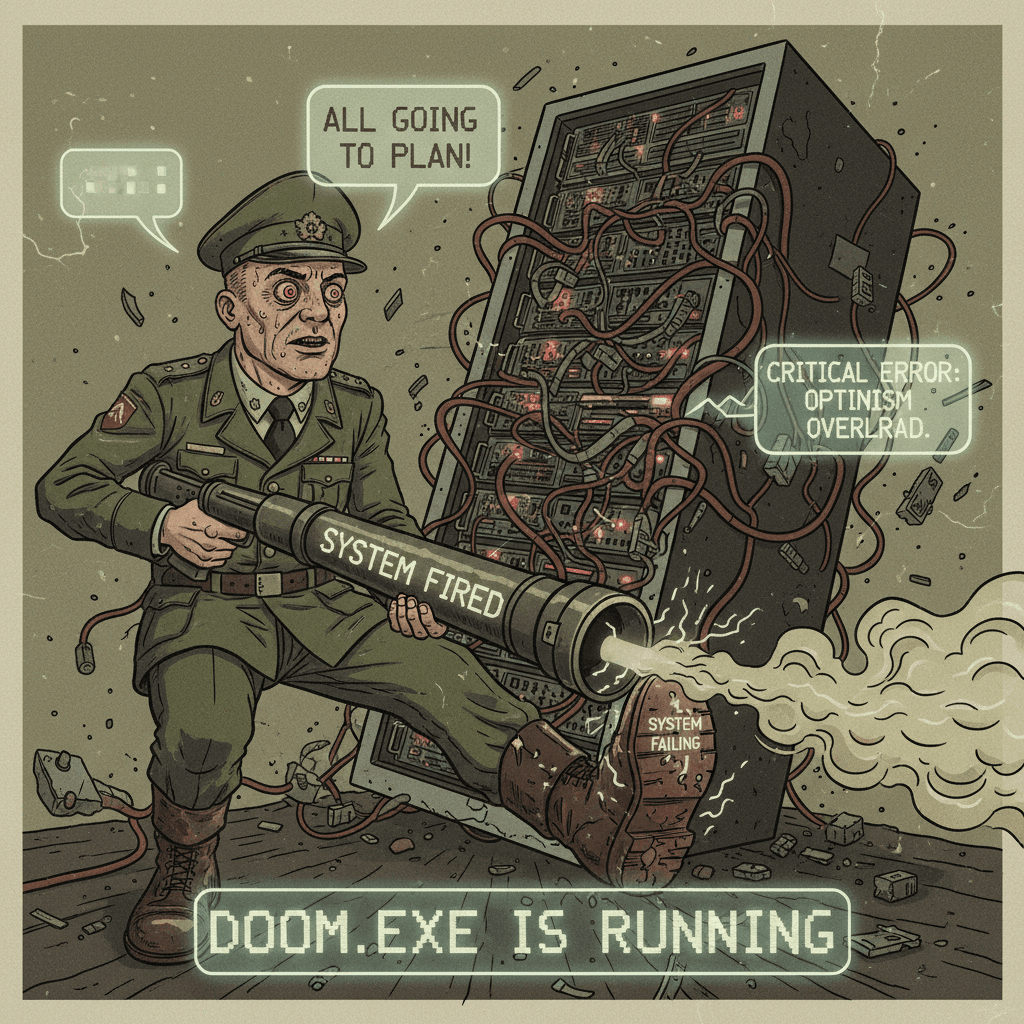
breathless defense analysis that confuses 'system fired' with 'system failing'
JUST IN: The sound you are hearing in the Baghdad footage is a machine gun firing 4,500 rounds per minute at objects in the sky above the US Embassy.
That is the C-RAM. A land based Phalanx naval defense system on a trailer in the Green Zone, firing 20 millimeter tungsten rounds at incoming Iranian drones. The radar acquires the threat. The fire control computer calculates the intercept. The six barrel Vulcan cannon opens up with the sound every American soldier in Iraq knows means something is inbound and the last line is engaging.
CENTCOM confirmed the engagement. No casualties. Embassy secure. Threats intercepted.
Now look at the numbers behind the sound.
The C-RAM carries 1,550 rounds. At 4,500 rounds per minute, that is approximately twenty seconds of continuous fire. Twenty seconds. Each burst against an incoming drone consumes a portion of that magazine. The system must then be reloaded by hand. Against a single drone or a pair of rockets, twenty seconds is generous. Against a swarm of ten or twenty Shaheds arriving simultaneously, twenty seconds is the entire engagement window for the last weapon system protecting the largest American diplomatic compound in the Middle East.
The effective range is 1.5 to 2 kilometers. That means the drone is already close when the C-RAM fires. Everything farther out was supposed to be handled by Patriot batteries, THAAD systems, and the layered air defense architecture that is being depleted across the Gulf at rates the production line cannot replace.
The C-RAM is the last layer. When it fires, every other layer has already been penetrated or saturated or bypassed. The footage from Baghdad is not evidence that the defense is working. It is evidence that the defense is working at maximum range and minimum margin.
RAND Corporation analyses estimate C-RAM success rates at 70 to 80 percent against individual drones. Against swarms the rate drops because the system cannot engage multiple targets simultaneously fast enough to prevent saturation before the magazine empties. Iran produces over 100 missiles and hundreds of drones per month. The C-RAM’s magazine holds twenty seconds of ammunition.
This is the cost asymmetry rendered in sound. A $20,000 Shahed forces expenditure of hundreds of rounds of specialized tungsten ammunition from a system costing millions. The Shahed destroyed costs Iran $20,000 and costs the C-RAM a fraction of its only magazine. The Shahed that gets through costs whatever it hits.
The footage is dramatic. The sound is terrifying. The defense works tonight. The question the footage cannot answer is what happens on the night when the swarm exceeds the magazine, which at current Iranian production rates and current American reload logistics is not a hypothetical but an arithmetic inevitability approaching on a timeline measured in weeks.
Twenty seconds of ammunition. That is the sound of the last line of defense. And twenty seconds is all there is.
https://
open.substack.com/pub/shanakaans
lemperera/p/the-invisible-siege-how-insurance?r=6p7b5o&utm_medium=ios
…